

Advanced Tonsillectomy Surgery
Do you suffer from recurrent throat infections? Or perhaps your child snores loudly due to large tonsils. Tonsillectomy Surgery is the definitive solution. It involves removing the infected tonsils. At Sinocare, we specialize in Tonsillectomy Surgery to improve your health. Furthermore, this procedure uses advanced, painless technology. Medications often fail to cure chronic tonsillitis. Therefore, surgical removal provides lasting relief. Ultimately, Tonsillectomy Surgery helps you breathe better and sleep peacefully.
What is Tonsillectomy?
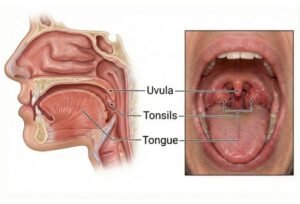
Tonsillectomy is surgery to remove the tonsils, the two small, oval glands at the back of your throat.The tonsils are part of the body’s immune system and help fight infections, particularly during childhood. However, removal becomes necessary when they get infected frequently. Therefore, many patients choose Tonsillectomy Surgery for relief.
Modern surgical methods such as coblation, laser, or electrocautery make the process safer and recovery faster with minimal bleeding.
The Goal: It stops chronic infections. Consequently, it clears the airway for better breathing.
The Procedure: Surgeons perform this under general anesthesia. Thus, the patient feels no pain.
Duration: Typically, the surgery takes between 30 to 45 minutes.
Target Patients: Doctors recommend this for children with frequent sore throats or sleep apnea.
Hospitalization: It is usually a day-care procedure. Therefore, you go home the same day.
Purpose of the Surgery
Tonsillectomy Surgery is recommended for patients suffering from recurrent or chronic tonsil problems. Often, these issues do not respond to medical treatment. For instance, common reasons include:
Relief from Nasal Blockage: Corrects chronic mouth breathing caused by obstructed nasal airways.
Treating Sleep Issues: Resolves severe snoring and Obstructive Sleep Apnea (OSA), ensuring better sleep quality.
Preventing Ear Infections: Helps prevent recurrent ear infections (Otitis Media) and fluid buildup (Glue Ear) that can affect hearing.
Reducing Sinusitis: Clears the obstruction of sinus drainage pathways to stop frequent sinus infections.
Correcting Speech: improving voice quality in children who sound “nasal” or muffled due to the blockage.
Is Tonsillectomy minimally invasive?
Yes, Tonsillectomy Surgery is minimally invasive.
Oral Approach: We perform the entire surgery through the mouth. Therefore, there are no external cuts.
Coblation Technology: We use “cool” energy to dissolve tissue. Consequently, heat damage is minimal.
Less Bleeding: Modern tools seal blood vessels instantly.
Faster Healing: The raw surface heals quickly. Thus, children recover in 7–10 days.
Reduced Pain: Advanced techniques cause less post-op pain than older methods.
Instruments and Technology used in Tonsillectomy Surgery
Tonsillectomy Surgery involves surgical removal of the tonsils using either traditional instruments or modern energy-based devices to ensure safe dissection and effective bleeding control.
1. Access Tools:
Mouth Gag: A specialized frame. It keeps the mouth open safely.
Headlight: A powerful light source. It illuminates the deep throat.
2. Removal Technologies:
Coblation Wand: A device that uses plasma energy. It dissolves tissue at low temperatures (60°C).
Bipolar Cautery: It uses electric current to cut and seal vessels simultaneously.
3. Suction Devices:
- Suction Catheter: It keeps the throat clear of blood and saliva. Therefore, the airway remains safe.
Advanced Equipments and Their Benefits
Using the right equipment reduces pain. Here is why we use specialized tools for Tonsillectomy Surgery:
1. Coblation System (Cold Ablation)
What it is: A wand that uses radiofrequency energy and saline.
The Benefit:
Less Pain: It operates at a low temperature. Therefore, it does not burn surrounding healthy tissue.
Faster Diet: Children return to normal eating sooner. Consequently, dehydration risk is lower.
2. Bipolar Diathermy Forceps
What it is: A precision tool that seals blood vessels.
The Benefit:
Safety: It stops bleeding immediately. Therefore, the surgery is bloodless.
Control: It targets only bleeding points. Thus, healing is faster.
3. Harmonic Scalpel (Optional)
What it is: An ultrasonic cutting device.
The Benefit:
Precision: It vibrates to cut tissue. Consequently, there is minimal charring or smoke.
Post-Surgery Experience
Recovery from Tonsillectomy Surgery requires care.
Immediate Aftermath: You will have a sore throat. This is normal.
Diet: You must eat soft, cold foods. Ice cream and jelly are excellent.
Hydration: Drinking water is vital. It prevents throat pain from increasing.
Pain Peak: Pain may increase slightly on day 5. However, this signals healing.
Timeline: Children recover in 1 week. Eventually, adults take up to 2 weeks.
Understanding the Risks
Tonsillectomy Surgery is very safe. However, minor risks exist:
Bleeding: Secondary bleeding can occur after 5–7 days. This happens if the scab falls off too early.
Infection: Rare throat infections can occur. However, antibiotics prevent this.
Dehydration: Pain may stop children from drinking. Therefore, fluid intake is crucial.
Voice Change: The voice may sound higher temporarily. This usually resolves quickly.
Taste Changes: A metallic taste may persist for a few weeks.
Tonsillectomy Surgery – FAQs
Is Tonsillectomy painful?
Some discomfort is expected for about a week, but pain is well-managed with medications and proper care. Most patients tolerate it well.
What foods can I eat after surgery?
Soft and cool foods like yogurt, mashed potatoes, custard, and ice cream are best. Avoid spicy, crunchy, or acidic foods until recovery.
Will my immunity decrease after tonsil removal?
No, the body has other immune tissues that take over the function of the tonsils. Immunity remains strong and unaffected.
How long should I take rest after tonsillectomy?
Children usually need 7–10 days of rest, while adults may take 10–14 days before returning to normal activities.
Can tonsils grow back after removal?
In rare cases, tiny remnants may regrow partially, but they typically do not cause any health issues.
Is bleeding normal after surgery?
A few spots of blood in saliva are normal. However, if there is continuous or fresh bleeding, immediate medical attention is required.
When can I start speaking normally again?
You can talk softly after a few hours, but avoid shouting or straining your voice for about a week to allow proper healing.
Will tonsillectomy cure snoring or sleep apnea?
If enlarged tonsils were the main cause of airway obstruction, tonsillectomy can significantly improve or completely resolve snoring and sleep apnea symptoms.
Book An Appointment
We believe that communication should always be easy and stress-free. You can reach Sinocare ENT using any of the following methods: