
Advanced FESS Surgery
Do you suffer from constant sinus headaches? Or perhaps nasal congestion never goes away. FESS Surgery is the gold standard treatment. It stands for Functional Endoscopic Sinus Surgery. At Sinocare, we specialize in FESS Surgery to clear blocked sinuses. Furthermore, this procedure restores natural drainage paths. Medication often fails to treat chronic sinusitis. Therefore, we recommend this minimally invasive solution. Ultimately, FESS Surgery allows you to breathe freely again.
What is FESS Surgery?
Functional Endoscopic Sinus Surgery, commonly known as FESS, is a minimally invasive surgical procedure used to treat chronic sinusitis and related sinus disorders. The surgery is performed using a thin endoscope — a small camera inserted through the nostrils — to visualize and clear blocked sinus pathways without external cuts.
FESS helps restore normal sinus drainage and ventilation by removing infected tissue, nasal polyps, or bone spurs obstructing the sinuses. It improves breathing, reduces infections, and enhances the sense of smell. This advanced, precision-based technique ensures faster healing and minimal discomfort.
The Goal: It restores natural ventilation. Consequently, the sinuses drain mucus normally.
The Procedure: We perform it entirely through the nostrils. Thus, no external cuts are needed.
Duration: Typically, the surgery takes between 60 to 90 minutes.
Target Patients: Doctors recommend this for people with chronic sinusitis or nasal polyps.
Hospitalization: It is usually a day-care procedure. Therefore, you go home the same day.
Purpose of the Surgery
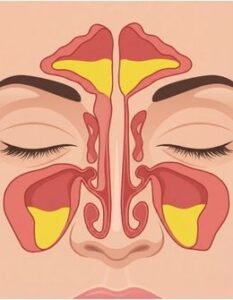
Generally, we recommend FESS Surgery when medical treatments fail. For example, if antibiotics or nasal sprays do not work. Commonly, reasons for FESS include:
Chronic Sinusitis: It treats infections that last longer than 12 weeks.
Nasal Polyps: It removes non-cancerous growths. Specifically, these block the nasal passages.
Recurrent Infections: It stops frequent sinus attacks.
Headaches: It relieves facial pain and pressure caused by trapped mucus.
Smell Loss: It restores the sense of smell. Often, blockage dampens this sense.
Is FESS minimally invasive?
Yes, FESS Surgery is a minimally invasive procedure.
No External Scars: We access the sinuses through the nose. Therefore, your face remains scar-free.
Preservation: We only remove diseased tissue. Consequently, healthy bone and tissue remain intact.
Less Trauma: Advanced tools cause minimal damage.
Faster Recovery: You heal quickly. usually, patients return to work in 5–7 days.
Less Pain: Compared to open surgery, discomfort is significantly lower.
Instruments and Technology used in FESS Surgery
We use state-of-the-art technology for FESS Surgery. This ensures precision near the eyes and brain.
1. Visualization Tools:
Rigid Endoscopes: These are high-definition cameras. They provide a magnified view of the sinus cavity.
Monitors: The surgeon views the procedure on a 4K screen.
2. Surgical Systems:
Microdebrider: A powered tool that shaves and suctions tissue simultaneously.
Balloon Sinuplasty Tools: These inflate to widen the sinus opening gently.
Navigation System: A “GPS” for the nose. It tracks instruments in real-time.
3. Manual Instruments:
Seekers & Probes: We use these to find sinus openings.
Forceps: These grasp and remove polyps carefully.
Advanced Equipments and Their Benefits
Modern FESS Surgery has evolved from open, external incisions to a high-precision endoscopic procedure. We use state-of-the-art technology to ensure maximum safety and effective sinus clearance.
1. High-Definition Endoscopes
What it is: A rigid, slender tube with a high-resolution camera and light, available in various angles (0°, 30°, 45°, 70°) to look around corners inside the nose.
The Benefit:
No External Scars: It allows the entire surgery to be performed through the nostrils, eliminating the need for cuts on the face.
Hidden Access: The angled lenses allow surgeons to see and clear “hidden” sinus pockets (like the maxillary or frontal sinuses) that are impossible to reach with a straight view.
Enhanced Safety: Provides a magnified, crystal-clear view of critical anatomy, reducing the risk of accidental injury.
2. Microdebrider System (Powered Shaver)
What it is: A powered rotary shaving tool with continuous suction that precisely removes nasal polyps and diseased tissue.
The Benefit:
Tissue Preservation: It shaves away only the diseased tissue while preserving the healthy mucous lining, which is crucial for rapid healing.
Clear Visibility: The built-in suction instantly removes blood and tissue, keeping the surgeon’s view clear at all times.
Speed and Efficiency: It removes bulky polyps much faster than manual tools, significantly reducing the duration of anesthesia.
3. Image-Guided Navigation System (The “GPS”)
What it is: An advanced tracking system that correlates the patient’s CT scan with the surgical instruments in real-time during the operation.
The Benefit:
Maximum Accuracy: It acts like a GPS for the nose, showing the surgeon exactly where their instrument is within the skull to within a millimeter.
Critical Safety: It helps avoid danger zones like the eyes (orbit) and the brain base, making the surgery extremely safe even in complex cases.
Thoroughness: It ensures all infected cells are located and removed, reducing the chance of the infection coming back.
4. Balloon Sinuplasty Tools
What it is: A small, flexible balloon catheter that is inserted into the blocked sinus opening and inflated to gently widen it.
The Benefit:
Minimal Trauma: It dilates the sinus passage without cutting or removing bone, preserving the natural structure.
Less Bleeding: Since no tissue is cut, bleeding is negligible.
Faster Recovery: Patients experience significantly less pain and swelling, often returning to normal activities within 24–48 hours.
Summary of Technological Advantages
By using this combination of HD Endoscopy, Microdebriders, and Navigation, we achieve:
Precision within 1mm of accuracy.
Zero external cuts or facial scars.
Protection of vital structures (Eyes & Brain).
Preservation of healthy tissue for natural breathing.
Post-Surgery Experience
Recovery from FESS Surgery is generally smooth.
Immediate Aftermath: You may feel stuffy, like a bad cold.
Nasal Packing: We use dissolvable packing. Therefore, removal is not painful.
Rinsing: You must use saline sprays. This keeps the nose clean and moist.
Activity: Avoid heavy lifting for two weeks. However, light activity is fine after 3 days.
Understanding the Risks
FESS Surgery is safe in expert hands. However, you should know the potential risks:
Bleeding: Minor nosebleeds can occur initially.
Infection: A rare risk exists during healing.
Dryness: The nose may feel dry or crusty for a few weeks.
Smell Change: Occasionally, smell takes time to return.
Adhesion: Scar tissue may form between nasal walls. However, good post-op care prevents this.
FESS Surgery – FAQs
Is FESS surgery painful?
No, the procedure is performed under anesthesia. After surgery, mild discomfort or congestion may occur, which can be easily managed with medications.
How long does the surgery take?
The duration of surgery depends on the extent of sinus disease, but it typically takes about 60–90 minutes.
Will I need nasal packing after FESS?
In most modern techniques, absorbable (dissolvable) packing is used or not needed at all, making recovery more comfortable.
How long will I need to rest after surgery?
You can resume light activities in 3–5 days and normal work in about a week, depending on your recovery progress.
Can sinus problems come back after FESS?
Recurrence is rare if postoperative care and medical management of allergies or infections are followed properly.
Will my sense of smell improve after FESS?
Yes, in many patients, the sense of smell improves significantly once sinus blockages are cleared and inflammation reduces.
Can FESS be combined with other nasal surgeries?
Yes, it can be combined with procedures like septoplasty or turbinate reduction for better nasal airflow and long-term relief.
What should I avoid after FESS surgery?
Avoid strenuous exercise, swimming, dusty environments, smoking, and nose blowing for at least 10–14 days after surgery.
Book An Appointment
We believe that communication should always be easy and stress-free. You can reach Sinocare ENT using any of the following methods: