
Septoplasty Surgery - Advanced Deviated Septum Correction
Do you struggle with a blocked nose on one side? Or perhaps you face chronic sinus infections. Septoplasty Surgery is the definitive solution. It corrects a deviated nasal septum. At Sinocare, we specialize in Septoplasty Surgery to straighten your nasal passage. Furthermore, this procedure restores balanced airflow. Medications often fail to fix structural bends. Therefore, surgical correction becomes necessary. Ultimately, Septoplasty Surgery helps you breathe freely and sleep better.
What is Septoplasty Surgery?
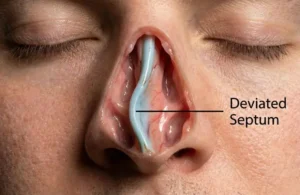
Septoplasty is a surgical procedure performed to straighten a deviated nasal septum. Specifically, the septum is the wall of cartilage and bone dividing the two nostrils. However, when the septum becomes crooked or displaced, it blocks airflow. Consequently, this causes nasal obstruction, snoring, sinus infections, and breathing difficulty.
During Septoplasty Surgery, the ENT surgeon straightens and repositions the septum. This step improves airflow and nasal function. Generally, surgeons perform the surgery under local or general anesthesia. Moreover, doctors can perform Septoplasty alone or alongside other nasal procedures, such as turbinate reduction or sinus surgery, for better breathing outcomes.
The Goal: It removes the physical blockage. Consequently, air flows evenly through both sides.
The Procedure: Surgeons perform it entirely inside the nose. Thus, no external cuts are visible.
Duration: Typically, the surgery takes between 45 to 60 minutes.
Target Patients: Doctors recommend this for people with a deviated septum causing breathing issues.
Hospitalization: It is usually a day-care procedure. Therefore, you go home the same day.
Purpose of the Surgery
Doctors recommend Septoplasty Surgery when the septum blocks the airway. The primary goal is function.
Nasal Blockage: It opens the obstructed side. Specifically, this allows effortless breathing.
Sinus Drainage: It unblocks sinus openings. Therefore, chronic infections reduce significantly.
Snoring Reduction: It clears the airway. Consequently, snoring volume often decreases.
Nosebleed Prevention: It fixes sharp bends that dry out the skin.
Headache Relief: It relieves pressure points where the septum touches the side wall.
Is Septoplasty minimally invasive?
Yes, Septoplasty Surgery is minimally invasive.
Internal Incisions: We make all cuts inside the nostrils. Therefore, your face remains scar-free.
Targeted Correction: We only reshape the bent part. Consequently, healthy support structures remain intact.
Endoscopic Aid: We use cameras to see clearly. Thus, tissue trauma is minimal.
No Swelling: Since we work inside, external swelling is rare.
Fast Recovery: Most patients return to desk work in 3–5 days.
Instruments and Technology used in Septoplasty Surgery
Modern Septoplasty Surgery corrects a deviated nasal septum to improve airflow. Surgeons use precise instruments for cartilage and bone reconstruction, often under endoscopic guidance.
1. Visualization Tools:
Nasal Endoscopes: These provide a magnified view deep inside the nose.
Headlights: High-intensity LED lights illuminate the surgical field.
2. Reshaping Instruments:
Swivel Knife: A specialized blade. It cuts cartilage smoothly without crushing it.
Forceps: We use these to remove bony spurs carefully.
3. Stabilization Tools:
Splints: Soft silicone sheets. They hold the septum straight while it heals.
Quilting Sutures: These stitches prevent blood collection (hematoma).
Advanced Equipments and Their Benefits
Using the right equipment improves results. Here is why we use specialized tools for Septoplasty Surgery:
1. Endoscopic Visualization System
What it is: A thin camera tube inserted into the nose.
The Benefit:
Precision: It allows the surgeon to see bends high up in the nose. Therefore, we fix the deviation completely.
Limited Dissection: We only lift the skin where necessary. Thus, healing is faster.
2. Microdebrider System (Optional)
What it is: A powered tool that shaves bone or cartilage.
The Benefit:
Accuracy: It removes sharp spurs without hammering. Consequently, there is less trauma to the skull base.
Cleanliness: It sucks away blood instantly. Therefore, the view remains clear.
3. Silicone Septal Splints
What it is: Soft, flexible sheets placed inside the nose.
The Benefit:
Comfort: Unlike old-fashioned gauze packing, these allow some airflow. Therefore, recovery is less suffocating.
Safety: They prevent scar bands (synechiae) from forming between walls.
Post-Surgery Experience
After Septoplasty Surgery, mild nasal congestion, swelling, and a stuffy feeling are common. Therefore, the doctor may place soft splints or packing inside the nose to support healing. Typically, they remove these within a few days.
Immediate Aftermath: You will feel congested. This is due to internal swelling.
Pain: Mild pain is common. However, medication manages it well.
Splint Removal: We remove the silicone sheets after 5–7 days.
Breathing: Breathing improves dramatically once the splints are out.
Activity: You must avoid heavy lifting for two weeks. This prevents nosebleeds.
Understanding the Risks
Septoplasty Surgery is a safe and commonly performed surgery. However, potential risks exist, including:
Bleeding: Nosebleeds can occur in the first week.
Septal Perforation: A small hole may form in the septum. However, this is rare with experienced surgeons.
Numbness: The front upper teeth may feel numb. This usually fades in a few months.
Shape Change: Extremely rarely, the nose tip may droop slightly.
Incomplete Correction: Severe bends might need a second touch-up.
Septoplasty Surgery – FAQs
Is septoplasty painful?
The procedure itself is painless as it is done under anesthesia. Post-surgery, mild discomfort or pressure is common and can be managed with pain medication.
How long does recovery take?
Most patients recover within 1–2 weeks. Swelling and congestion improve gradually, and full recovery occurs within 3–4 weeks.
Will septoplasty change the shape of my nose?
No, septoplasty corrects the internal nasal structure and does not change the outer appearance unless combined with rhinoplasty.
Is nasal packing necessary?
Many surgeons now use soft or dissolvable packing, which makes recovery more comfortable. Some cases may not require packing at all.
How long do I need to avoid strenuous activities?
Avoid heavy exercise, bending, or lifting for at least 10–14 days to prevent bleeding.
Can the septum deviate again after surgery?
Recurrence is rare but possible due to trauma or incomplete correction. Regular follow-ups help ensure long-term success.
Will I breathe better immediately after surgery?
You may feel congested for the first few days due to swelling or packing, but breathing improves noticeably once healing begins.
Can septoplasty be done along with sinus or turbinate surgery?
Yes, it’s common to combine septoplasty with sinus or turbinate reduction surgery for comprehensive nasal airway improvement.
Book An Appointment
We believe that communication should always be easy and stress-free. You can reach Sinocare ENT using any of the following methods: