Advanced Sleep Apnea Surgery
Do you snore loudly every night? Or perhaps you wake up gasping for air. You likely suffer from Obstructive Sleep Apnea (OSA). Sleep Apnea surgery is often the best long-term solution. It permanently opens your airway. At Sinocare, we perform specialized Sleep Apnea surgery to restore your breathing. Furthermore, this procedure significantly improves your sleep quality. Medication cannot fix a physical throat blockage. Therefore, surgery becomes necessary. It prevents the soft tissues from collapsing during deep sleep. Ultimately, Sleep Apnea surgery protects your heart and boosts your energy.
What is Sleep Apnea Surgery?
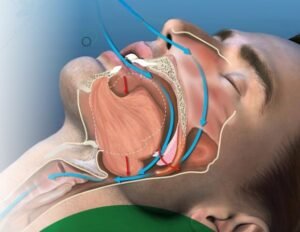
Sleep Apnea is a serious sleep disorder where breathing repeatedly stops and starts throughout the night. It primarily occurs when the throat muscles relax and collapse, physically blocking the airway and preventing oxygen from reaching the lungs. Consequently, this leads to loud snoring, gasping for air, and severe daytime fatigue due to fragmented, poor-quality sleep.
The Goal: It prevents the airway from collapsing during sleep.
The Method: We remove or tighten excess tissue in the soft palate, tonsils, or tongue.
The Target: It is designed for patients who cannot tolerate CPAP machines.
Customization: We locate the exact blockage site first. Then, we fix it.
The Result: You breathe continuously without dangerous pauses.
Purpose of the Surgery
Patients choose Sleep Apnea surgery to regain control over their health. Primarily, it addresses these critical issues:
Stop Snoring: It tightens loose, vibrating tissues. Consequently, your snoring reduces drastically.
Oxygen Supply: It ensures your brain gets enough oxygen at night.
Heart Health: It lowers the risk of hypertension and stroke.
Daytime Energy: You feel awake and alert during the day.
CPAP Freedom: It offers a solution for those who struggle with sleep masks.
Is Sleep Apnea Surgery minimally invasive?
Modern Sleep Apnea surgery is far less invasive than older methods. However, the approach depends on your anatomy.
No External Scars: We perform most procedures entirely through the mouth.
Targeted Removal: We only target the specific tissue causing the block.
Radiofrequency: We use radio waves to shrink tissue without cutting.
Less Bleeding: Advanced tools seal blood vessels instantly.
Faster Recovery: Therefore, you return to normal life sooner.
Instruments and Technology used in Sleep Apnea Surgery
We use high-tech diagnostic and surgical tools. Sleep Apnea surgery demands extreme precision.
DISE (Drug-Induced Sleep Endoscopy): We watch your airway while you are asleep.
Coblation Wand: This tool dissolves tissue at low temperatures.
Laser Systems: We use lasers to stiffen the soft palate.
Robotic Arms: These help us reach deep into the throat safely.
Microdebriders: These shave away bulky tissue cleanly.
Advanced Equipments and Their Benefits
The success of Sleep Apnea surgery depends on the technology used. Here is why we use these specific tools:
1. DISE (Drug-Induced Sleep Endoscopy)
What it is: A camera test performed while you are in a drug-induced nap.
The Benefit: It shows us exactly where you snore. Therefore, we treat the precise problem area. This eliminates guesswork.
2. Coblation Technology
What it is: A device using plasma energy to remove tissue.
The Benefit: It operates at a cool temperature. Consequently, it burns surrounding tissues less than standard cautery. This means less post-operative pain for you.
3. Radiofrequency Ablation (RFA)
What it is: A needle that delivers energy to shrink the tongue base.
The Benefit: It is minimally invasive. Moreover, it creates more room for air without removing the tongue muscle.
Post-Surgery Experience
Recovery from Sleep Apnea surgery varies by patient. However, most follow a similar path.
Throat Pain: You will have a sore throat for 1 to 2 weeks.
Diet: You must eat soft, cool foods. Ice cream is helpful.
Hydration: Drinking water is vital for healing.
Swelling: The throat may swell initially. Thus, snoring might seem worse temporarily.
Improvement: You notice clear breathing after the swelling settles.
Timeline: Most people return to work within 10 to 14 days.
Understanding the Risks
Sleep Apnea surgery is generally safe. Nevertheless, you should be aware of potential risks:
Bleeding: Minor bleeding can occur during recovery.
Swallowing: You might find swallowing difficult for a few days.
Voice Changes: Rarely, your voice may sound slightly different.
Taste Changes: Temporary metallic taste in the mouth.
Residual Snoring: Sometimes, mild snoring persists.
By choosing Sleep Apnea surgery, you invest in long-term health. It resolves the root cause of your sleep issues effectively.
Frequently Asked Questions
Is Sleep Apnea surgery painful?
Since the surgery involves tissues in the throat, patients typically experience a sore throat similar to severe tonsillitis for about 1 to 2 weeks after the procedure. However, this is temporary. We manage this discomfort effectively with pain medication, cool fluids, and a soft diet.
Will the surgery change my voice?
It is possible to notice a slight change in your voice immediately after surgery due to swelling in the throat and palate. This usually creates a “muffled” sound. However, this is almost always temporary. Once the swelling subsides (usually within 2–3 weeks), your voice typically returns to normal.
How does the doctor know which surgery I need?
We do not use a “one-size-fits-all” approach. We perform a diagnostic procedure called Drug-Induced Sleep Endoscopy (DISE). This allows us to watch your airway collapse while you are asleep. By seeing exactly where the blockage is (nose, palate, tongue, or epiglottis), we tailor the surgery to target that specific area.
Will my snoring stop completely?
Surgery is extremely effective at reducing snoring. Most patients experience a significant reduction in both the volume and frequency of snoring. While 100% silence cannot always be guaranteed, the loud, disruptive snoring that affects your partner is usually resolved.
Does my weight affect the surgery results?
Yes. While surgery corrects the physical structure of your airway (like large tonsils or a long palate), excess weight can add tissue bulk to the neck area. Doctors generally recommend that patients maintain a healthy weight to ensure the long-term success of the surgery.
How long will it take to recover?
Most patients require about 10 to 14 days of downtime. During this period, you will need to rest and stick to a strict liquid or soft diet to allow the throat to heal. Avoid strenuous exercise or heavy lifting for at least 3 weeks to prevent bleeding.
Is Sleep Apnea surgery safe?
Yes, modern Sleep Apnea surgery is considered safe. We use advanced technologies like Coblation and radiofrequency, which reduce bleeding and complications. However, as with any surgery performed under general anesthesia, there are minor risks which your surgeon will discuss with you in detail during your consultation.
Can I stop using my CPAP machine after surgery?
For many patients, the primary goal of surgery is to eliminate the need for a CPAP machine. While results vary based on the severity of your condition, surgery is highly successful in allowing patients who cannot tolerate the mask to sleep naturally without it. In some severe cases, surgery may simply lower the pressure setting required for the machine, making it more comfortable.
Book An Appointment
We believe that communication should always be easy and stress-free. You can reach Sinocare ENT using any of the following methods: