Advanced Rhinoplasty Surgery
Are you unhappy with the shape of your nose? Or perhaps you struggle with chronic breathing issues. Rhinoplasty surgery is the most effective solution for these concerns. Commonly known as a “nose job,” this procedure reshapes the nose for cosmetic or functional reasons. At Sinocare, we specialize in advanced Rhinoplasty surgery to enhance facial harmony. Furthermore, we ensure that your breathing improves significantly. Whether you need a subtle change or a major correction, our experts guide you. Ultimately, Rhinoplasty surgery boosts your confidence and drastically improves your quality of life.
What is Rhinoplasty?
Rhinoplasty surgery, commonly known as a “nose job,” is a procedure designed to reshape the nose by modifying the underlying bone and cartilage. It is performed to enhance facial harmony and correct structural defects that may affect confidence. Furthermore, this surgery effectively resolves breathing difficulties caused by a deviated septum or other nasal obstructions.
The Goal: It creates a nose that fits your face perfectly.
The Method: Surgeons access the nasal structure to resize or reshape it.
Two Types: We perform it for cosmetic looks or functional breathing repairs.
Customization: Every surgery is unique. Therefore, we tailor the plan to your specific facial features.
The Result: You gain a balanced profile and better airflow.
Purpose of the Surgery
Patients choose Rhinoplasty surgery for various personal and medical reasons. Primarily, it addresses the following issues:
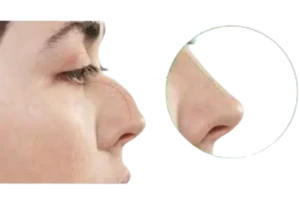
Cosmetic Enhancement: It removes humps on the nose bridge. Additionally, it refines a bulbous or droopy tip.
Straightening: It corrects a crooked nose caused by genetics or injury.
Size Reduction: It narrows a nose that looks too wide for the face.
Breathing Correction: It fixes a deviated septum. Consequently, airflow improves immediately.
Injury Repair: It restores the nose shape after a sports injury or accident.
Is Rhinoplasty minimally invasive?
Modern Rhinoplasty surgery is less invasive than in the past. However, the technique depends on your specific needs.
Closed Rhinoplasty: The surgeon makes cuts inside the nostrils. Therefore, you have no visible scars.
Open Rhinoplasty: We make a tiny cut on the columella (base of the nose). This heals almost invisibly.
Preservation Techniques: We use methods that preserve your natural ligaments.
Less Trauma: Advanced tools cause less tissue damage.
Faster Healing: Consequently, swelling reduces much faster than with older methods.
Instruments and Technology used in Rhinoplasty surgery
We use cutting-edge technology to ensure precision. Rhinoplasty surgery requires exact movements.
3D Imaging: We photograph your face before surgery. Then, we simulate the results digitally.
High-Definition Endoscopes: These cameras allow us to see deep inside the nose.
Ultrasonic Piezo System: This is a revolutionary tool for cutting bone.
Diamond Burrs: These polish the bone edges smoothly.
Bipolar Cautery: This stops bleeding instantly and precisely.
Advanced Equipments and Their Benefits
Using the right equipment changes the outcome of Rhinoplasty surgery. Here is why we use advanced tools:
1. Piezosurgery (Ultrasonic Bone Cutter)
What it is: A device that uses ultrasonic vibrations to cut bone.
The Benefit: It cuts only bone and spares soft tissue. Therefore, you experience less bruising and less swelling. Moreover, the bone heals faster.
1. High-Definition Endoscopes
What it is: A slender, medical-grade camera tube inserted through the nose or mouth to provide a magnified view of the adenoids.
The Benefit:
No Guesswork: Allows the surgeon to see the exact size and location of the adenoids rather than relying on feel (blind technique).
Safety: Ensures that nearby delicate structures, like the Eustachian tube opening (which connects the ear to the nose), are not accidentally damaged.
Completeness: Helps in visualizing and removing “hidden” tissue, significantly reducing the risk of regrowth.
Post-Surgery Experience
Recovery from Rhinoplasty surgery is generally smooth. However, patience is key.
Day 1: You wear a small nasal splint. You might feel mild congestion.
First Week: Swelling appears around the eyes. However, pain is usually minimal.
Day 7: We remove the splint and stitches. You see the new shape immediately.
Activity: You can return to work after one week.
Full Result: The nose refines over time. Specifically, subtle swelling fades over 3 to 6 months.
Understanding the Risks
Rhinoplasty surgery is safe in expert hands. Nevertheless, you should know the potential risks:
Bleeding: Minor nosebleeds can occur initially.
Numbness: The tip of the nose may feel numb temporarily.
Asymmetry: Rarely, the nose may look slightly uneven as it heals.
Breathing Changes: Temporary blockage is common due to swelling.
Revision: occasionally, a minor touch-up is needed for perfection.
Overall, Rhinoplasty surgery remains one of the most satisfying procedures for patients. It transforms both looks and breathing simultaneously.
Frequently Asked Questions
Is Rhinoplasty surgery painful?
Most patients report that the procedure is not as painful as they expected. Since the surgery is performed under general anesthesia, you feel nothing during the operation. Afterward, you may experience mild pressure or a dull ache around the nose and eyes, which is easily managed with prescribed pain relievers.
How long does the recovery take?
The initial recovery period is about 7 to 10 days. During this time, you will wear a nasal splint. Most patients return to work or school after one week. However, minor swelling can take several weeks to fully subside, and the final refined shape may take 6 to 12 months to settle completely.
Will I have visible scars after surgery?
It depends on the technique used. In Closed Rhinoplasty, all incisions are made inside the nostrils, so there are no visible scars. In Open Rhinoplasty, a tiny incision is made across the columella (the skin between your nostrils). This heals very well and becomes almost invisible within a few months.
Can Rhinoplasty fix my breathing problems?
Yes. While many people think of it as cosmetic, functional rhinoplasty is specifically designed to improve breathing. By correcting a deviated septum or strengthening the nasal valves, the surgery can permanently resolve chronic congestion and airflow issues.
What is the best age for a nose job?
Ideally, the nose should be fully developed before surgery. For girls, this is usually around age 15–16, and for boys, around age 17–18. There is no upper age limit for adults, as long as you are in good general health.
What is the difference between Open and Closed Rhinoplasty?
Closed Rhinoplasty involves incisions hidden inside the nose and is best for minor reshaping. Open Rhinoplasty involves a small external cut that allows the surgeon to lift the skin for a direct view of the nasal structure. The open approach is generally preferred for complex reshaping or major structural work.
Are the results of Rhinoplasty permanent?
Yes, the structural changes made to the bone and cartilage are permanent. However, your nose will continue to age naturally with the rest of your face. Protecting your skin from the sun and avoiding injury ensures the results last a lifetime.
Will my insurance cover Rhinoplasty?
Insurance typically does not cover surgery performed solely for cosmetic reasons. However, if the surgery is medically necessary to correct breathing issues (like a deviated septum) or to repair trauma from an accident, a portion of the procedure may be covered. It is best to check with your provider.
Book An Appointment
We believe that communication should always be easy and stress-free. You can reach Sinocare ENT using any of the following methods: